When audio playback or microphone capture is not working in Windows 11 or Windows 10, verify whether audio devices are muted or disabled, confirm microphone privacy toggles, restart audio background services, or run built-in audio troubleshooters.
Research Method and Limitations
This troubleshooting guide was prepared directly from public documentation excerpts from Microsoft on resolving sound or audio problems in Windows 11 and Windows 10. Competing search results and external technical coverage were unavailable for comparison. The supplied excerpts are truncated, and no unseen text, hidden settings, or unstated diagnostic steps were assumed. The visible documentation provides steps for volume mixer mute controls, device disable checkboxes in Sound settings, microphone privacy toggles, restarting three core audio services, and running audio troubleshooters. The evidence does not document Stereo Mix specifically, nor does it provide complete procedures for opening Device Manager, diagnosing hardware connection faults, selecting default input devices, or resolving undetected recording hardware. Microsoft documentation notes that support for Windows 10 ended on October 14, 2025, after which free software updates, technical assistance, and security fixes are discontinued.
Checking Sound Settings and Disabled Devices
Audio devices will not function if they are disabled in Windows settings:
Windows 11
- Select Start > Settings > System > Sound.
- Under Advanced, select More sound settings to view the Playback (output) or Recording (input) tabs.
- To verify device properties, select Start > Settings > System > Sound, select your audio device, choose Device properties for both output and input devices, and ensure the Disable checkbox is cleared.
Windows 10
- Select Start > Settings > System > Sound.
- Select your audio device, select Device properties for both the output and input devices, and ensure the Disable checkbox is cleared.
Checking Volume Controls and Mute State
An output device will not produce sound if it is muted:
- Select and hold (or right-click) the Speakers icon on the taskbar. If not visible, select Show hidden icons in the overflow area.
- In Windows 11, select the arrow to open connected devices (tool tip: Select a sound output), then select the settings icon to the right of the Volume mixer slider (tool tip: More mixer settings). If muted, an “x” appears next to the volume control; select the volume control to adjust volume or select the Unmute speakers icon.
- In Windows 10, select Open Volume mixer. If any device is muted, a red circle with a line through it appears next to the volume control; select the volume control to unmute.
Checking Microphone Privacy Settings
If microphone input is not captured by applications, ensure privacy permissions are enabled:
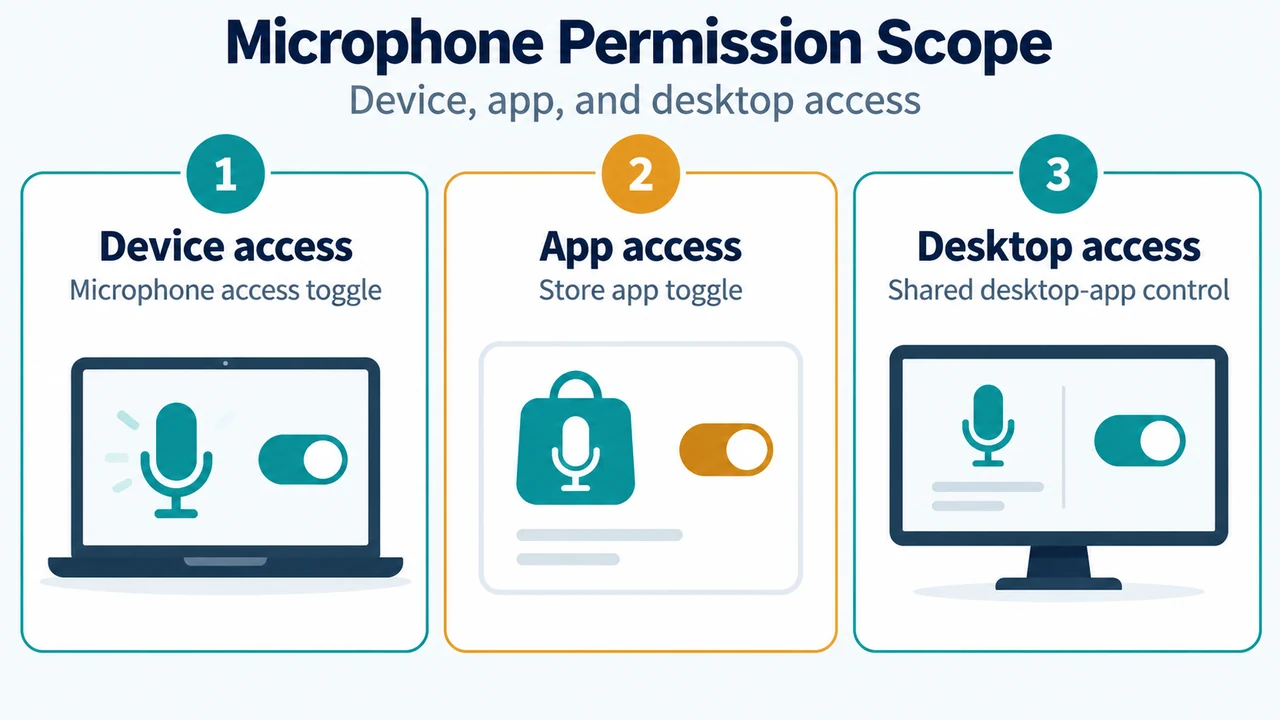
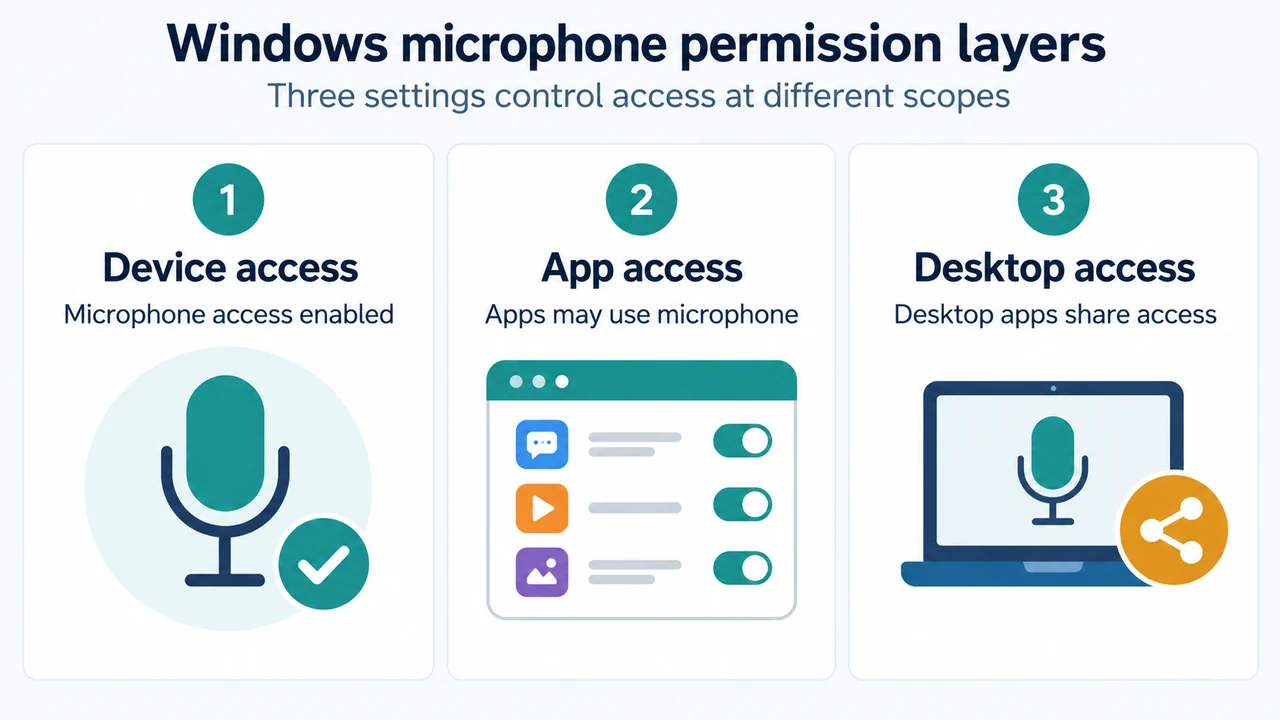
- Windows 11: Select Start > Settings > Privacy & security. Under App permissions, select Microphone. Make sure Microphone access and Let apps access your microphone are turned On. If an issue occurs with a specific app, scroll down under Let apps access your microphone and make sure the toggle next to that app is turned On.
- Windows 10: Select Start > Settings > Privacy, then select Microphone from the left menu. Under Allow access to the microphone on this device, select Change and ensure the toggle is turned On. If the issue occurs with a specific app, scroll down to Choose which Microsoft Store apps can access your microphone and confirm the toggle next to that app is turned On.
Restarting Windows Audio Services
If audio problems persist, restart the underlying Windows audio background services:
- In the search box on the taskbar, type
services, then select it from the results. - Select each of the following services, select and hold (or right-click) each, select Restart, and select Yes:
- Windows Audio
- Windows Audio Endpoint Builder
- Remote Procedure Call (RPC)
Running the Windows Audio Troubleshooter
Windows includes automated troubleshooters to diagnose audio issues:
- Windows 11: Select Start > Settings > System > Troubleshoot > Other troubleshooters. Go to the Audio section and click Run.
- Windows 10: Start by running the automated audio troubleshooter in the Get Help app. Alternatively, select Start > Settings > Update & security > Troubleshoot. Under Find and fix problems, click Playing audio and select Run the troubleshooter.
Text version of the diagrams
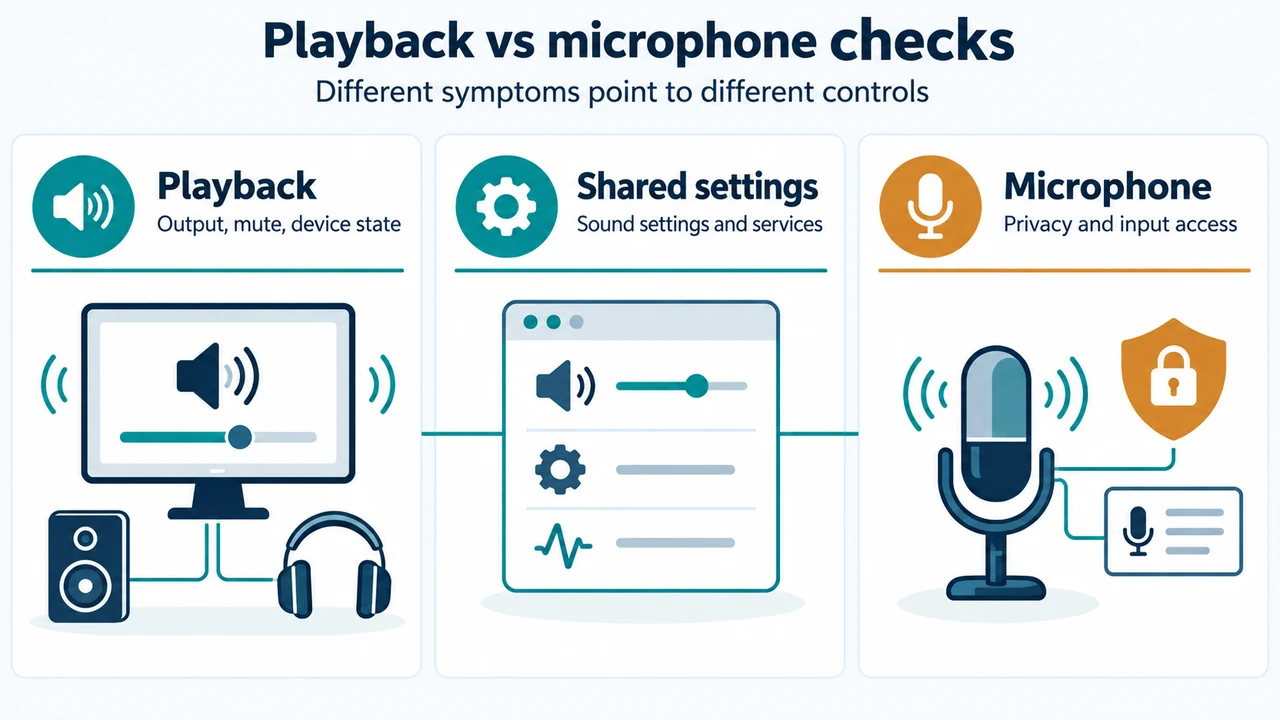
- Playback vs microphone checks: Playback — Output, mute, device state; Shared settings — Sound settings and services; Microphone — Privacy and input access
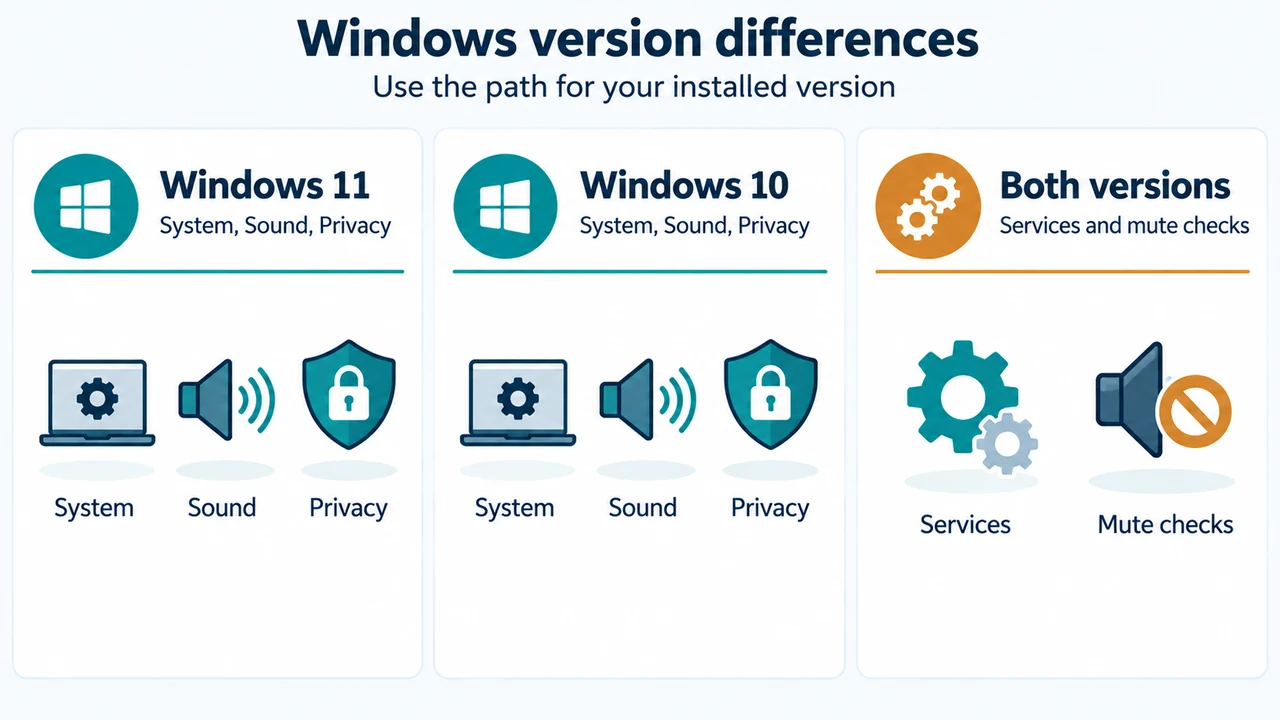
- Windows version differences: Windows 11 — System, Sound, Privacy; Windows 10 — System, Sound, Privacy; Both versions — Services and mute checks